
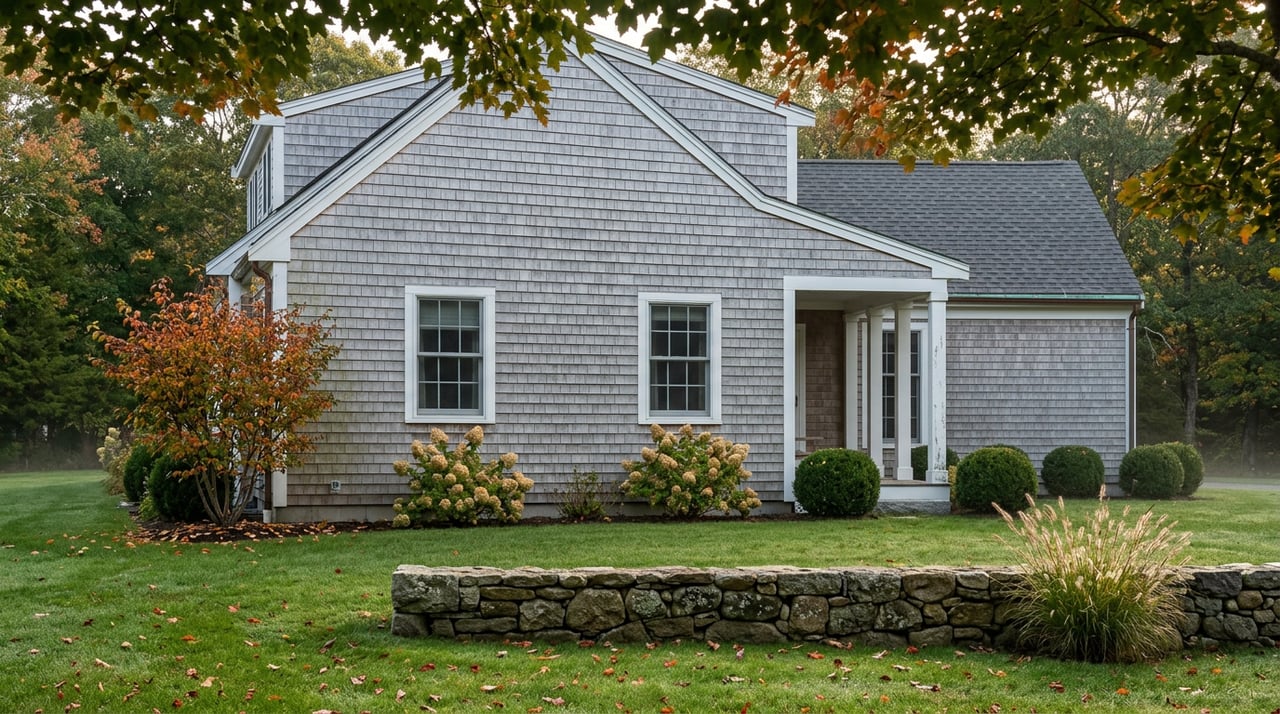
Sometime around the second week of September, the attendant who checks stickers at the West Beach parking lot stops showing up. No announcement, no sign changes overnight. The gate arm just stays up. For nine months, at the same lot where in July a resident sticker is the price of entry, a car with New Hampshire plates or a rental with a Logan Airport tag can pull in and park without anyone asking who they are.
That flip is the thing to understand about Beverly Farms once summer ends. The village does not go quiet so much as it goes public. The pieces that felt gated in August, the beach, the trails behind it, the parking that made both usable, loosen their grip almost exactly when the fireworks are done and the parade banners come down. If you already live here, September and October are not the consolation prize for missing the season. They are the months when more of the neighborhood is actually yours to use.
West Beach's governing rule is simple enough that most residents know it by heart: sticker required, Memorial Day through Labor Day, no exceptions. What gets less attention is what happens the rest of the year. Once the season officially ends, the parking lot opens to anyone, resident or not, and stays that way until the following Memorial Day.
The beach itself runs about 1.13 miles along the shoreline, though the stretch actually deeded to Beverly Farms and Prides Crossing residents covers only about a quarter of that length, a detail that traces back to an 1852 act of the Massachusetts legislature incorporating the West Beach Corporation, built on land originally deeded to a settler named John West back in 1666. The rest of the beach belongs to other owners entirely. Most of the year, none of that boundary matters, because the parking that gates access to any of it is open to whoever shows up.
For a family in the Farms, that means the walk to the water in October is not a smaller version of the July walk. It is a longer one, since there is no reason to hurry back before the lot fills with cars that have stickers you don't. The upper beach and the back-dune path also happen to sit in a productive stretch for fall bird migration, which makes the same walk you might take with a coffee in hand double as a decent excuse to bring binoculars.
Not everything in the village runs on the beach's calendar. Henry J. Dix Park keeps its own rhythm regardless of the month. The playground is where kids end up after school whether it's June or October. The baseball field carries games into whatever stretch of decent weather the fall gives us, and the basketball and tennis courts pick up the overflow once the beach lot, no longer capacity-limited, still isn't where everyone wants to be on a 55-degree Saturday.
That steadiness is worth noting because it's easy to think of a beach village as a place that shuts down when the water gets cold. Dix Park is the counterexample sitting five minutes from the sand: a piece of public Beverly Farms that never needed a season to be useful.
Behind the village, along the shore of Wenham Lake, Moraine Farm and the adjoining John C. Phillips Nature Preserve offer over four miles of connected paths, most of them the same carriage loops that landscape architect Frederick Law Olmsted laid out in 1882 for a country estate before he went on to design Biltmore. The Trustees of Reservations, which co-owns the property with the Cape Ann Waldorf School, acquired an additional 66 acres in 2022 and finished the improvements needed to open the expanded reservation to public walking in 2024, connecting it directly to the city-owned Phillips Preserve next door.
The property runs a working community garden with roughly 90 plots tended by Beverly residents, many of whom moved their plots there from the city's old Cole Street Garden. By September, most of those plots are past their peak and heading toward harvest, which is exactly when the surrounding forest and meadow start to look like the reason to visit. Jeremy Dick, the Trustees' Senior Regional Stewardship Manager for the North Shore Region, has described the property's carriage roads as delightful, providing access to woodland, swamps, and fields. Dogs are welcome on leash. Swimming and wading in the lake itself are restricted since it's a working drinking water supply for the region, a detail worth knowing before anyone lets a dog off leash near the shoreline.
None of this requires a beach sticker or a summer schedule. It's simply a piece of the neighborhood that gets more comfortable to use as the tourist traffic on the coast road thins out.
A handful of small businesses do the work of holding Beverly Farms together once the seasonal foot traffic disappears. Vidalia's Market on the village's commercial spine keeps its case stocked with farm-fresh produce, cheeses, baked bread, and sandwiches year-round, and its coffee counter is as much a reason to stop as anything on the shelves. Hale Street Tavern stays open as the neighborhood's casual sit-down option through the colder months, oysters and pub food included. Closer to the beach itself, Bagel Dudes fills the gap for anyone walking back from a cold-weather trip to the sand who wants something warm before the drive home.
Two civic anchors round out the list: the Beverly Farms Branch Library and Hastings House, the community center that hosts the folding tables and bike-decorating sessions the day before the Fourth of July parade every summer, and reverts to a quieter calendar of meetings and story times the rest of the year. Between the market, the tavern, the library, and the community center, the five or six blocks that make up the village center do not need the beach crowd to stay busy. They just get less crowded doing it.
Put it together and the pattern is less about summer fading into fall and more about a single mechanism, beach access, flipping from restricted to open on a fixed date every year. Everything else in Beverly Farms, the park, the trail network, the market and the tavern, runs on its own schedule and barely notices the switch. The beach is the one piece of the village that behaves differently depending on the calendar, and understanding that is the difference between treating October as a lesser month here and treating it as the month when the parking lot finally works the way it does everywhere else.
If you already call the Farms home, none of this changes what the neighborhood is. It just changes what's easy to reach for the next eight months. And if you're weighing what a home in a village like this is actually worth in today's market, whether it's a place you already own or one you're watching from a distance, McClelland Del Rio Group knows this stretch of coastline well enough to walk you through it, no sticker required.


While our experience in sales, marketing, and negotiation gives us an edge, it’s the relationships with our clients, agents, and community that we value most. If you’re looking for honest guidance, creative solutions, and a team that genuinely loves what we do, we’d love to connect.

McClelland Del Rio Group
21 Central St Manchester by the Sea MA 01944